
Bartram's Bass Formally Recognized
Beautiful addition to the Family of Black Bass

Scientists have now formally described a previously unrecognized black-bass species from the Atlantic-slope river systems: Bartram’s Bass, Micropterus pucpuggy.
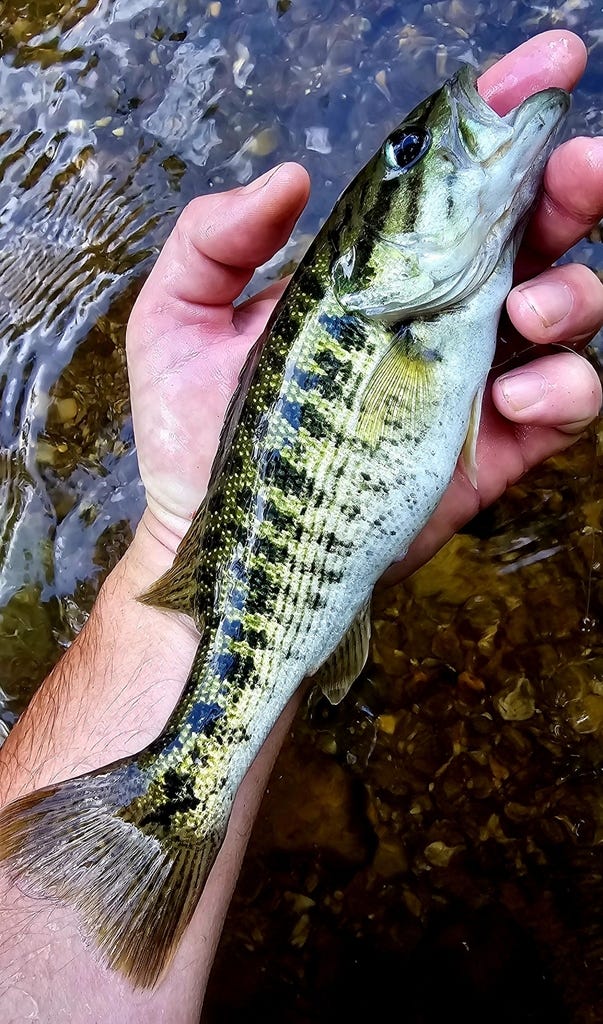
It lives in the Savannah/Saluda (and nearby) river drainages in GA, SC and NC and had long been treated as a form of “redeye bass” by anglers and some biologists. The new species description appears in a peer-reviewed taxonomic paper and has been summarized by the state agencies and universities involved.
How the species determination was made
Field recognition and specimens. Anglers and local biologists had noted a distinctive small, gold-patterned bass in rocky mountain/ foothill streams for decades. Researchers collected specimens across the fish’s range to examine consistent physical traits (coloration, fin tips, tooth patch, eye color, scale counts, etc.).
Genetic work (modern genomics). The authors used mitochondrial and nuclear DNA plus reduced-representation sequencing (RADseq) to test whether these fishes were a genetically distinct lineage rather than local variants or hybrids. Individuals assigned to Bartram’s Bass formed a reciprocally monophyletic clade in both mtDNA and RADseq analyses, which is strong evidence they represent a distinct species. The team also screened specimens to avoid including hybridized individuals in the type series. Magnolia Press
How Bartram’s Bass fits in with other Black Bass (Micropterus)
Bartram’s Bass was historically lumped with the redeye bass complex (Micropterus coosae sensu lato). The new work splits out Bartram’s Bass (and another newly described Altamaha bass) as separately diagnosable species. Genetically and morphologically they are distinct from other commonly known Micropterus (Largemouth, Smallmouth, Alabama/Spotted/Redeye groups), though they are close relatives within the black-bass radiation. Magnolia Press+1
Practical implication: what anglers called a “redeye” in those rivers is now (for conservation and biological records) treated as Micropterus pucpuggy, with its own range and management needs. SCDNR
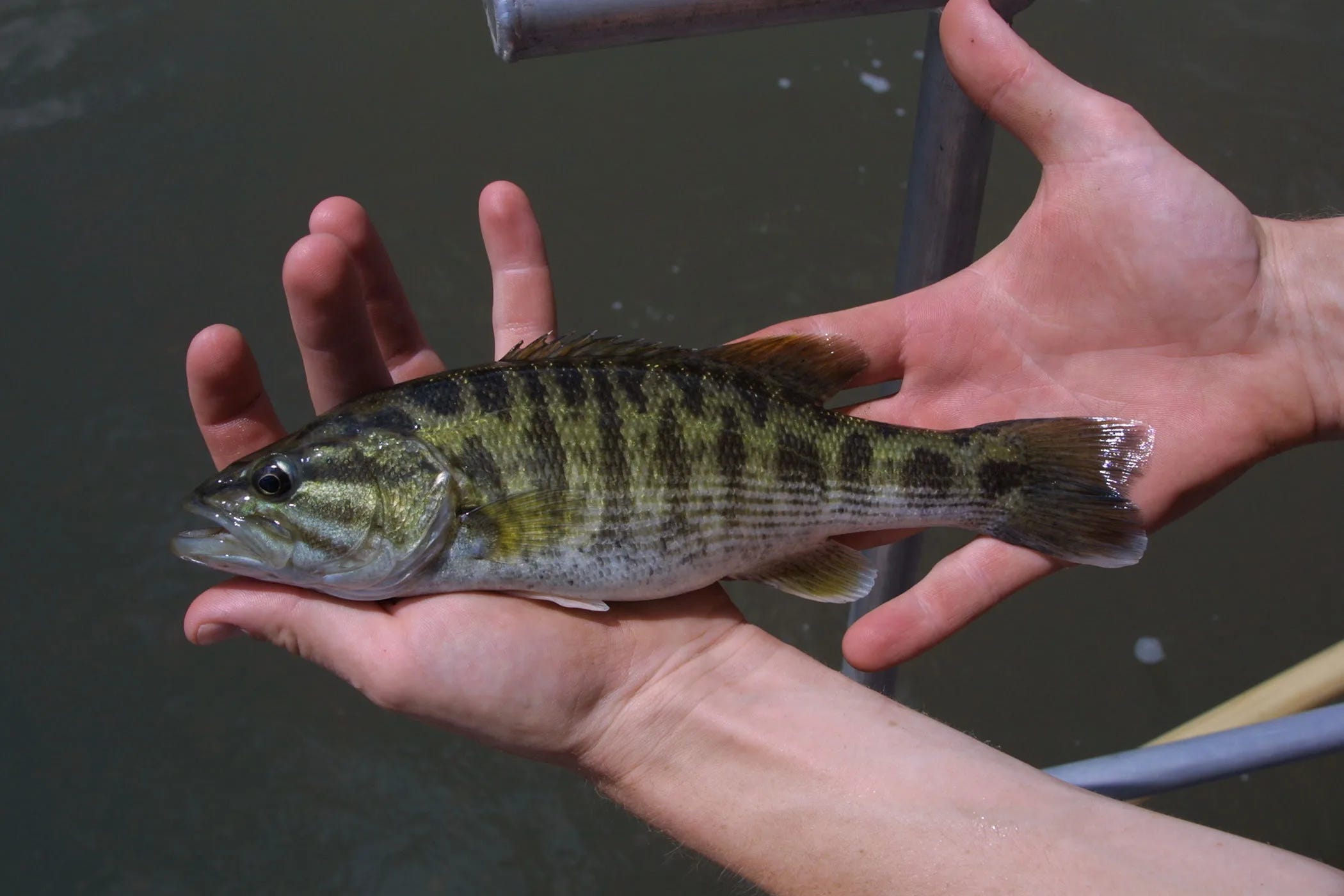
Principal threats to Bartram’s Bass in River Systems
Because Bartram’s Bass is a river-dwelling endemic with a relatively small geographic range, several threats are especially important:
Hybridization / genetic introgression. The biggest recurring concern is hybridization with non-native or introduced congeners — notably Alabama bass (Micropterus henshalli) and other stocked species. Where those non-native bass establish in the same tributaries, they can interbreed and genetically swamp the native gene pool, reducing or eliminating genetically “pure” Bartram’s Bass in affected streams. Several studies and monitoring efforts have documented hybridization risks and already-detected introgression in parts of the basin. OUP Academic+1
Reservoir conversion / habitat loss. Bartram’s Bass is adapted to flowing, rocky stream habitats. Conversion of river reaches into reservoirs (damming) often results in local extirpation of this species because reservoir habitat favors other bass (largemouth, spotted, etc.) and changes flow, temperature, and substrate. Historical sampling indicates functional extirpation from some impounded reaches. OUP Academic+1
Flow alteration and water quality changes. Urbanization, agriculture, increased sedimentation, nutrient loading, and altered flow regimes (from withdrawals, dams, altered stormwater) degrade spawning and juvenile rearing habitat. Bartram’s Bass’s reliance on clear, rocky stream sections makes it sensitive to such changes. open.clemson.edu+1
Small range & fragmentation. Endemics with restricted ranges are more vulnerable to stochastic events (droughts, extreme floods), local pollution events, or land-use change because there are fewer unaffected populations to recolonize damaged areas. Magnolia Press
Angling introductions and human movement. Intentional or accidental movements of fish for sport (transplanting, bait releases) can bring non-native bass into previously pure tributaries, accelerating hybridization and disease risk. Management and angler awareness are key to preventing that. SCDNR+1
Conservation and management actions being used or recommended
Genetic monitoring (fin clips, RADseq or marker screens) to map where pure vs. hybrid populations occur and to guide management. Magnolia Press
Preventing introductions of non-native bass and restricting transfers of live fish between basins. SCDNR
Habitat protection for key stream reaches, improving water quality, and managing flows to maintain riffles and rocky substrates. open.clemson.edu
Public outreach to anglers and local communities — many of these fishes were known to anglers long before formal description, so working with anglers helps detect populations and stop harmful practices.
Bartram’s Bass is a formally described, genetically distinct black-bass species native to the Savannah/Saluda and nearby rivers. The discovery required classic field naturalist work plus modern genomic methods to separate a true species from look-alike relatives and hybrids. Its small endemic range and the presence of non-native bass in parts of its watershed make hybridization and habitat alteration the primary conservation concerns. Active genetic monitoring, habitat protection, and preventing further introductions are the main tools biologists are using to keep pure populations viable